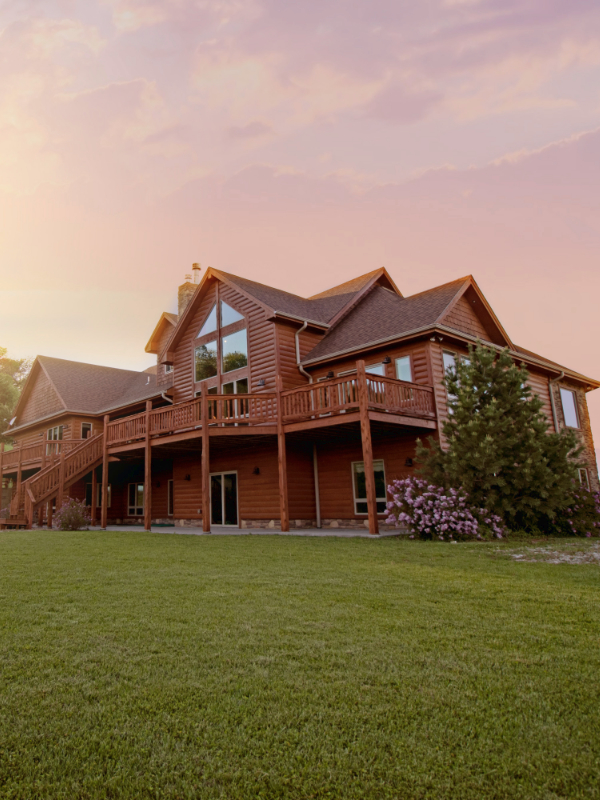
Buying an investment farm can provide agricultural income, recreational opportunities, long-term ownership, and the potential for the land to increase in value. However, acreage and annual rent alone do not tell you whether a property is a sound purchase.
To properly evaluate an investment farm in Missouri, buyers should examine the property’s documented income, operating expenses, soil productivity, leases, improvements, access, contracts, and future marketability.
Two farms with similar asking prices can produce very different financial results. One may have productive cropland, reliable tenants, efficient field layouts, and few immediate expenses. Another may require drainage work, fencing, road improvements, building repairs, or a new tenant before it can perform as expected.
This guide explains 10 areas to review before buying a Missouri investment farm.
Boyer Land Company helps buyers evaluate investment farms throughout Missouri, with particular experience across Northern and Northeast Missouri.
Looking for an investment farm? Tell Boyer Land Company what you are looking for.
1. Define What You Want the Farm to Accomplish
Begin by deciding what you expect from the property.
Are you primarily seeking annual income? Do you want a farm that combines agricultural income with hunting? Are you planning to operate the land yourself, rent it to a local farmer, or hold it as a long-term asset?
Common investment-farm goals include:
- Cash rent from tillable acreage
- Income from a crop-share or flexible lease
- Pasture or grazing rent
- Conservation payments
- Hunting or recreational lease income
- Timber management
- A combination of farm income and personal recreation
- Long-term land ownership
- A future home, cabin, or family property
- Agricultural expansion for an existing operation
Your goal affects which properties deserve consideration.
A buyer focused on predictable cash rent may prioritize highly tillable acreage, productive soils, efficient fields, and a dependable tenant. A buyer who wants income and recreation may accept fewer tillable acres in exchange for timber, water, wildlife habitat, or a secluded building site.
Write down your priorities before reviewing listings. Otherwise, it is easy to become distracted by an attractive barn, impressive hunting photos, or a large acreage number that does not support your original objective.
Questions to answer
- What is my primary reason for buying?
- How important is immediate annual income?
- Will I use the property personally?
- Am I willing to make improvements?
- Do I want active involvement or relatively passive ownership?
- How long do I expect to own the farm?
- What level of income variability can I accept?
2. Verify the Acreage and Land Use
Do not assume every acre produces income.
A 160-acre farm may include cropland, pasture, timber, waterways, ponds, roads, buildings, steep ground, and other acres that cannot be rented or farmed. The gross acreage is important, but the allocation of those acres is often more important.
Ask for documentation showing:
- Surveyed acreage
- Tillable acreage
- Pasture acreage
- Timber acreage
- Conservation-program acreage
- Building sites and improvements
- Roads and access lanes
- Ponds, creeks, and waterways
- Easements and rights-of-way
Compare the listing description with survey documents, county records, aerial maps, Farm Service Agency information, lease documents, and what you observe while walking the property.
Terms such as “approximately,” “more or less,” and “subject to survey” deserve attention. They do not necessarily indicate a problem, but buyers should understand what acreage is being represented and how it was calculated.
Calculate the price per usable acre
Price per gross acre is a convenient comparison, but it can hide important differences.
Consider a hypothetical 100-acre property priced at $600,000:
- Property A has 85 productive tillable acres.
- Property B has 50 tillable acres, 35 acres of timber, and 15 acres in roads, waterways, and improvements.
Both properties cost $6,000 per gross acre. They are not the same investment.
Property B may still be valuable because of hunting, timber, privacy, or recreation, but the buyer should not value all 100 acres as income-producing cropland.
3. Confirm the Farm’s Existing Income
The seller or listing agent should be able to explain how the property currently produces income.
Potential sources may include:
- Cropland cash rent
- Crop-share income
- Flexible cash rent
- Pasture rent
- Hunting leases
- Conservation payments
- Storage or building rent
- Residential rent
- Timber income
Request documentation rather than relying only on projected income.
Useful records may include:
- Current written leases
- Previous rent payments
- Conservation contracts
- Hunting agreements
- Tenant payment history
- Crop-share settlement records
- Building or storage agreements
- Relevant operating statements
- Property-tax records
- Insurance costs
A statement that a farm “could rent for” a certain amount is not the same as documented income.
Potential income can still be useful when evaluating an unleased farm, but the estimate should be supported by local market information, land productivity, field layout, access, and discussions with qualified local operators.
Do not add the same value twice
Be careful when a property’s agricultural and recreational uses overlap.
For example, a farm may produce crop rent while also supporting hunting. However, a hunting lease could affect the owner’s personal use, the tenant’s farming activities, insurance requirements, and property access.
Determine whether multiple income sources can realistically coexist before including all of them in a projection.
4. Review Every Lease and Tenant Arrangement
A productive farm with a good tenant can be an attractive investment. An unclear lease can create confusion for the buyer, seller, tenant, and real estate professionals.
Missouri farms may use:
- Fixed cash leases
- Flexible cash leases
- Crop-share agreements
- Pasture leases
- Hunting leases
- Building or storage leases
- Verbal rental arrangements
Ask the following questions about every lease:
- Is the agreement written or verbal?
- Who are the parties?
- What land and improvements are included?
- When does the lease begin and end?
- Does it renew automatically?
- When is rent due?
- Has the tenant consistently paid?
- Can the agreement be assigned to a new owner?
- Who maintains roads, fences, terraces, drainage, and waterways?
- Who controls hunting and recreational access?
- Who pays for fertilizer, lime, seed, repairs, and improvements?
- Are there restrictions on farming practices?
- Has proper notice been given if the lease will end?
Do not assume that buying the property immediately removes the existing tenant.
Missouri rules concerning verbal and written farm leases can be complicated. A buyer should have a qualified Missouri attorney review lease terms, notice requirements, transfer provisions, and possession dates before closing.
The tenant relationship has value
A responsible local tenant may provide more than annual rent. A good operator can help maintain fertility, control erosion, care for access points, communicate problems, and protect the long-term productivity of the land.
Rent is important, but the highest offered rent is not always the best arrangement if it creates additional risk or encourages poor stewardship.
5. Study Soils, Productivity, Drainage, and Field Layout
Soil maps are an important starting point, but they should not be the end of the investigation.
The USDA Web Soil Survey can help buyers identify mapped soil types, slopes, drainage characteristics, and potential limitations. Buyers should compare that information with actual production history and conditions observed on the farm.
Review:
- Soil types
- Productivity ratings
- Expected crop suitability
- Slope
- Erosion concerns
- Drainage
- Wet areas
- Flood exposure
- Terraces and waterways
- Field shape
- Field size
- Equipment access
- Crop and yield history
- Fertility and soil-test information
A field can contain productive soils and still be difficult to operate because it is narrow, irregular, divided by creeks, or accessible only through another portion of the property.
Likewise, a lower-rated field may perform better than expected because it has been carefully managed, drained, fertilized, and protected from erosion.
Walk the farm
Aerial maps cannot show every washout, damaged crossing, soft access road, broken terrace, wet spot, or eroded hillside.
Whenever possible, walk or drive the property with someone who understands agricultural land. Look at field entrances, drainage patterns, waterways, creek crossings, fence lines, erosion, crop condition, and access between different sections of the farm.
If drainage, flooding, or soil condition could materially affect the purchase, consult an appropriate agricultural, engineering, soil, or drainage professional.
6. Identify the Farm’s True Ownership Expenses
Gross income is not the same as net income.
An investment farm may require the owner to pay for:
- Property taxes
- Liability and property insurance
- Road maintenance
- Fence repairs
- Building repairs
- Mowing and vegetation control
- Pond or dam maintenance
- Drainage work
- Terrace and waterway repairs
- Professional management
- Accounting and legal services
- Utilities
- Well and septic maintenance
- Conservation-contract obligations
- Improvements promised under a lease
Review several years of expenses when records are available. One year may not reflect irregular expenses such as replacing a culvert, repairing a pond, reroofing a building, or rebuilding a section of fence.
Look for deferred maintenance
Some farms appear inexpensive because necessary work has been postponed.
Examples include:
- Failing fences
- Washed-out crossings
- Overgrown access roads
- Damaged terraces
- Eroded waterways
- Leaking roofs
- Unsafe electrical systems
- Neglected grain bins
- Silted ponds
- Unmaintained drainage structures
- Abandoned equipment or debris
Estimate these costs before making an offer. A property with a lower asking price can become the more expensive farm once immediate work is included.
7. Evaluate Buildings and Other Improvements
Improvements add value when they are useful, functional, and economical to maintain.
A barn, grain bin, machine shed, house, cabin, shop, well, pond, or fence system should not automatically be treated as an asset. Its condition and relevance to the buyer’s plan determine its real value.
Inspect:
- Roofs and foundations
- Structural condition
- Electrical service
- Water service
- Ventilation
- Doors and access
- Grain-handling equipment
- Wells and septic systems
- Heating and fuel systems
- Fencing and gates
- Ponds, dams, and spillways
- Driveways and internal roads
- Utility availability
Ask whether an improvement currently produces income or reduces operating expenses. If not, determine whether it supports personal use or creates an additional maintenance obligation.
Avoid paying for improvements you do not need
A livestock facility may be valuable to an operator but largely irrelevant to a buyer seeking cash-rented row-crop land. A cabin may appeal to a recreational buyer but add insurance and maintenance expenses for someone who only wants agricultural income.
Value each improvement based on its condition, usefulness, and relationship to your ownership plan.
8. Investigate Access, Easements, Boundaries, and Restrictions
A farm’s income and resale potential can be affected by how people and equipment legally enter the property.
Confirm:
- Legal access from a public road
- Road frontage
- Recorded access easements
- Shared roads or lanes
- Maintenance responsibilities
- Gates and entry points
- Equipment access to fields
- Access during wet weather
- Bridges and creek crossings
- Boundary locations
- Fence ownership and condition
Do not rely exclusively on an existing path or the fact that someone has historically crossed neighboring land. Confirm that the access is legally established and sufficient for the intended use.
Also review:
- Utility easements
- Pipeline easements
- Conservation easements
- Deed restrictions
- Zoning requirements
- Building restrictions
- Mineral rights
- Timber rights
- Water rights
- Hunting rights
- Existing encroachments
- Survey discrepancies
A title company, surveyor, attorney, and other qualified professionals can help identify issues that may not be visible during a property tour.
9. Understand Conservation Programs and Other Contracts
Conservation programs can provide dependable payments while protecting soil, water, and wildlife habitat. They also create obligations.
If acreage is enrolled in the Conservation Reserve Program or another government program, verify:
- Enrolled acreage
- Annual payment
- Payment schedule
- Contract start and expiration dates
- Required management practices
- Mowing or maintenance restrictions
- Mid-contract management requirements
- Penalties for noncompliance
- Transfer requirements
- Whether the buyer must assume the contract
- What happens if the buyer wants to change the land use
Do not calculate a property’s long-term income by assuming an expiring contract will automatically be renewed at the same rate.
The future eligibility, payment, and terms of a conservation program may change. Evaluate the property both with and without the current contract income.
Private hunting, farming, grazing, storage, residential, and access agreements should receive the same attention. Determine what transfers to the buyer and what must be renegotiated.
10. Calculate the Potential Return and Consider Resale
Once the income and expenses have been verified, calculate the property’s estimated net operating income.
Basic calculation
Gross annual property income
minus
Annual ownership and operating expenses
equals
Estimated net operating income
A basic capitalization rate can then be calculated:
Estimated net operating income ÷ purchase price = capitalization rate
Hypothetical example
| Item | Annual amount |
|---|---|
| Farm rent | $30,000 |
| Hunting lease | $4,000 |
| Total gross income | $34,000 |
| Property taxes | $3,500 |
| Insurance | $1,500 |
| Estimated repairs and maintenance | $3,000 |
| Total operating expenses | $8,000 |
| Estimated net operating income | $26,000 |
If the purchase price were $800,000:
$26,000 ÷ $800,000 = 3.25% estimated capitalization rate
This is a simplified example. It does not include financing costs, income taxes, depreciation, transaction expenses, major capital projects, vacancies, or changes in rent.
A buyer using financing should separately evaluate debt payments, interest rates, down-payment requirements, and cash flow after debt service.
Stress-test the assumptions
Do not calculate only the most optimistic outcome.
Consider what happens if:
- Rent is lower than expected
- The farm is vacant for a season
- A conservation contract expires
- Crop or hunting income changes
- Property taxes and insurance increase
- A tenant does not renew
- A major repair becomes necessary
- Interest rates affect future buyer demand
- The farm takes longer to resell than expected
Think about the next buyer
Even if you intend to own the farm for many years, consider who might buy it from you.
Future marketability may be supported by:
- Productive soils
- A high percentage of usable acreage
- Efficient fields
- Reliable access
- Established utilities
- Well-maintained improvements
- Recreational appeal
- Proximity to active farm operators
- Multiple potential uses
- Clear boundaries and title
- Responsible land management
Appreciation is possible, but it should not be treated as guaranteed. Buy a property that makes sense under realistic current assumptions rather than depending entirely on a higher future sale price.
Compare Farms Using the Same Information
When evaluating multiple Missouri investment farms, use the same categories for each one.
Create a comparison sheet that includes:
| Category | Farm A | Farm B | Farm C |
|---|---|---|---|
| Asking price | |||
| Gross acreage | |||
| Tillable acreage | |||
| Pasture acreage | |||
| Conservation acreage | |||
| Timber and recreational acreage | |||
| Documented annual income | |||
| Estimated annual expenses | |||
| Estimated net operating income | |||
| Lease expiration | |||
| Immediate improvement costs | |||
| Legal access | |||
| Personal-use value | |||
| Potential resale advantages |
This prevents an attractive feature on one property from overshadowing a more important financial or physical difference.
Where to Look for Investment Farms in Missouri
Missouri contains several distinct agricultural regions. Land type, soil, terrain, crops, pasture quality, improvements, and local rental markets can vary considerably.
Boyer Land Company works with buyers throughout Missouri and has particular experience across Northern and Northeast Missouri, including:
- Scotland County
- Knox County
- Shelby County
- Adair County
- Macon County
- Sullivan County
- Linn County
- Monroe County
Properties in this region may include productive row-crop farms, pasture, CRP acreage, timber, and farms that combine agricultural income with deer and turkey hunting.
The right location depends on the buyer’s goals. Instead of choosing a county first, define the type of income, acreage, recreational use, purchase budget, and amount of management you want. Then compare properties in the areas capable of meeting those requirements.
Questions to Ask Before Making an Offer
Before moving forward, ask:
- How many acres are actually tillable, rented, or enrolled in a program?
- What income has the property produced during the past several years?
- Can the income be documented?
- What expenses does the owner currently pay?
- Is the farm subject to a written or verbal lease?
- When does the tenant have the right to possession?
- Are any conservation contracts transferring with the property?
- What repairs or improvements are likely during the first several years?
- Are there drainage, erosion, flooding, or access problems?
- Has the property been surveyed?
- Are there easements, restrictions, or shared access agreements?
- What personal property is included in the sale?
- Do the buildings have practical value?
- What makes the property attractive to a future buyer?
- Which assumptions still need independent verification?
Research Tools for Missouri Farm Buyers
The following resources can assist with preliminary research:
- USDA Web Soil Survey for mapped soil information
- Missouri Farmland Values Opinion Survey for statewide and regional land-value context
- Cash Rental Rates in Missouri for rental-market context
- Basics of Farm Lease Agreements for an introduction to lease structures
- Crop-Share Leases in Missouri for crop-share considerations
- Missouri Fence and Boundary Law Reference Guide for general boundary and fencing information
These resources are starting points. They do not replace property-specific inspections, surveys, title work, legal advice, financial analysis, or other professional due diligence.
Find an Investment Farm That Fits Your Goals
The best investment farm is not necessarily the property with the most acres, the highest advertised rent, or the lowest price per acre.
It is the farm whose documented income, expenses, physical characteristics, lease terms, management requirements, personal benefits, and long-term marketability align with your goals.
Boyer Land Company can help you identify and compare investment farms across Missouri. Tell us your preferred region, budget, acreage, income goals, recreational interests, and buying timeline.
Tell Boyer Land Company What You’re Looking For
Phone: (636) 295-1476
Email: andy@boyerlandcompany.com
This article is provided for general educational purposes. Boyer Land Company provides real estate services and does not provide financial, tax, engineering, accounting, or legal advice. Buyers should independently verify property information and consult qualified professionals before purchasing an investment property.